
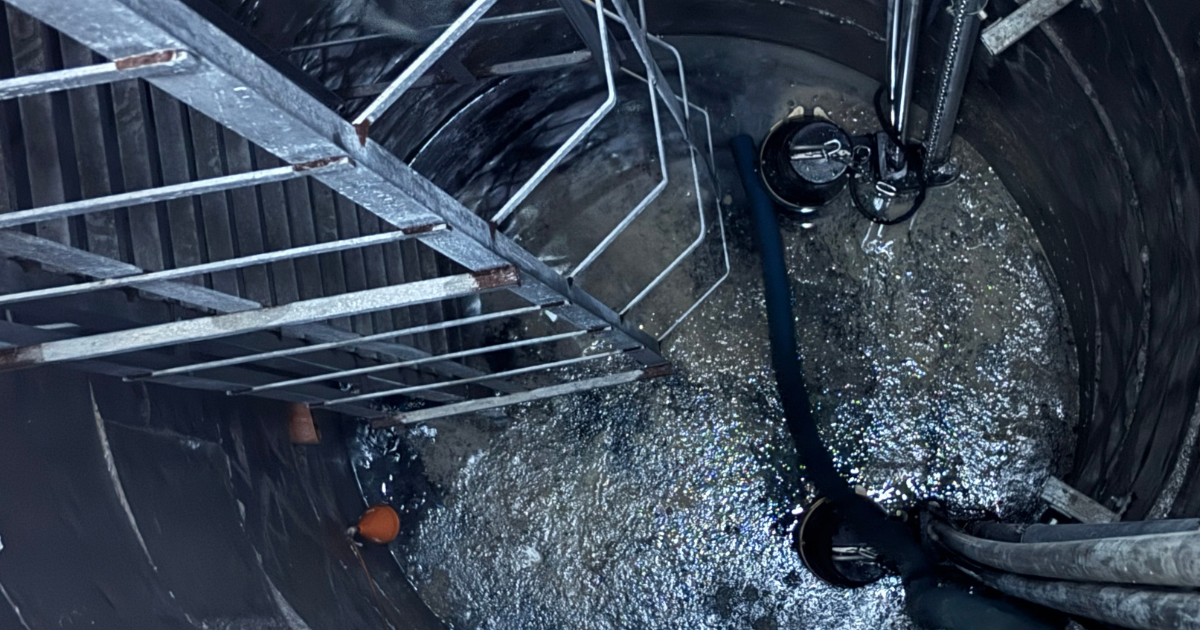
Fuel tanks are critical infrastructure in refineries, shipyards and industrial facilities. Over time, they accumulate sediment, scale and residues that affect both the quality of the stored fuel and the integrity of the tank itself. Regular cleaning is not simply maintenance — it is a prerequisite for safe restart of operations.
What Accumulates in a Fuel Tank
At the bottom and along the walls, the following are typically found:
sediment and sludge from fuel degradation
scale from oxidation and corrosion of the tank walls
residues of oils, water and fuel contaminants
biofilm from microbial growth, particularly in tanks with extended periods of inactivity
How the Cleaning is Carried Out
Restoration requires a combination of methods:
Vacuum cleaning for the extraction of sediment, sludge and liquid residues
High-pressure hydroblasting for the removal of scale and oxides from walls
Confined space cleaning carried out by specialised entry personnel
Why Cleaning is Critical Before Restart
Restarting operations without prior cleaning carries serious risks:
contamination of new fuel by residues
damage to pumps and filters from solid particles
risk of fire or explosion from accumulated vapours
STEPE’s Expertise in Tank Cleaning
STEPE undertakes the complete cleaning of fuel tanks in refineries, maritime facilities and industrial plants, combining vacuum cleaning and hydroblasting for optimum results. With personnel trained for confined space entry and certified equipment, STEPE ensures clean, safe tanks ready for restart.